

 Benjamin Teo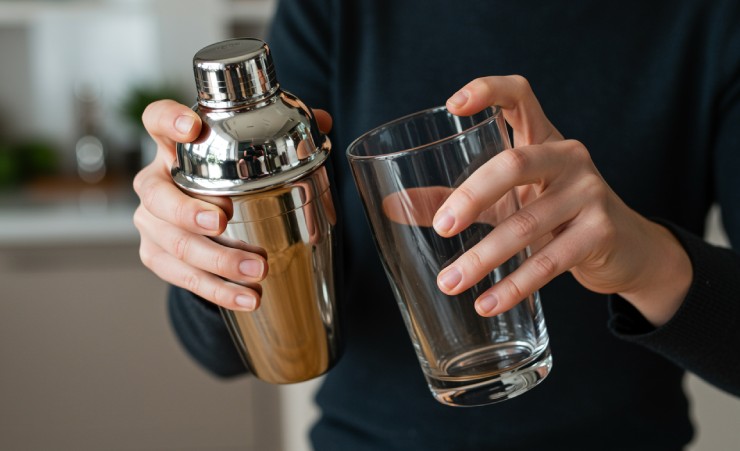
So, you’ve decided to up your cocktail game at home—nice one. But then, you hit the first hurdle: which cocktail shaker should you get? It sounds simple until you’re knee-deep in stainless steel options, fancy French names, and novelty designs shaped like rockets. Choosing the right shaker to complement your home bar can make all the difference between a smooth, perfectly mixed cocktail and a sad, watered-down mess (no one wants that).
Types of Cocktail Shakers
Boston Shaker

This is one of the must-have barware items that everyone should get. It comprises two parts: a large metal tin and a smaller tin or a pint glass. You place them together, shake like a pro, and then separate with a satisfying pop (or a minor wrestling match, depending on your technique).
Pros:
- Great for mixing multiple drinks at once (solid capacity)
- Easy to clean (no fiddly bits)
- Offers that professional, I know what I’m doing vibe
Cons:
- Needs a separate strainer (like a Hawthorne or fine mesh)
- It can be tricky to seal and open if you’re new to it
Perfect for: confident beginners, aspiring pros, and anyone who likes a shaker with a bit of flair in the build and performance.
Cobbler Shaker
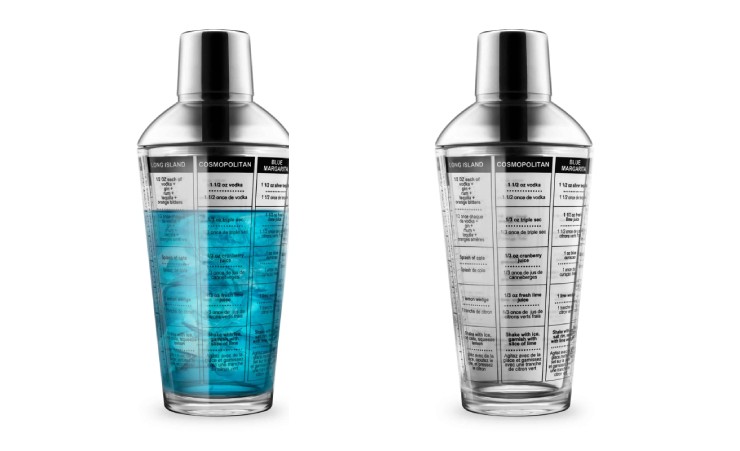
Most people picture this—it has three parts: the main tin, a snug-fitting lid with a built-in strainer, and a little cap. It’s classic, compact, and charming on any home bar shelf. At DadShop, we have two perfect cobble shakers with recipes.
Pros:
- Built-in strainer makes it super convenient
- Smaller size, great for single drinks
- Usually looks quite elegant (think polished steel or copper finishes for lovely aesthetics)
Cons:
- Lid can get stuck, especially with cold or fizzy drinks
- Slightly annoying to clean if liquid gets trapped in the cap
Perfect for: casual cocktail lovers, beginners, and anyone who wants a beautiful shaker that’s easy to pick up and use.
French / Parisian Shaker
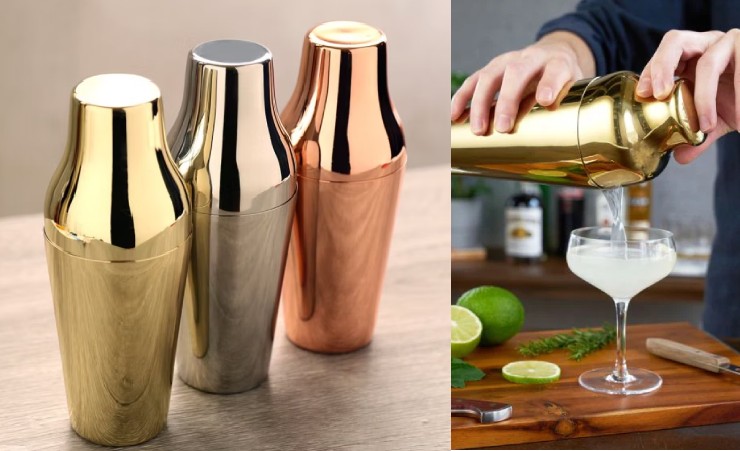
The French shaker is the stylish cousin of the Boston. Like the Boston, it consists of two metal tins shaped more elegantly (think Audrey Hepburn in shaker form). There is no glass involved.
Pros:
- Sleek design, great for that minimalist-chic bar look
- Easier to seal than a Boston
- Solid materials often mean better insulation and durability
Cons:
- Still needs a separate strainer
- Harder to find than the other two (but that adds to the charm, doesn’t it?)
Perfect for: lovers of subtle luxury, minimalist aesthetics, and slightly show-offy dinner parties.
Other Shaker Types
Now we get into the fun stuff—novelty and modern shakers that don’t quite fit the traditional mould.
- Electric Shakers: Great if shaking makes your arms tired (we’ve all been there). Just press a button and let the motor do the work. Bonus: consistent mixing results.
- Hand-held Tumblers: Not technically shakers, but some tumblers have built-in strainers and lids. They’re decent for camping or minimalist setups.
- Jet Shakers: These look like something out of a Bond film. They have high-pressure jets for intense mixing. Overkill? Maybe. Fun? Absolutely.
- Novelty Shakers: Shaped like grenades, pineapples, or even lightsabers. It is not consistently highly effective, but it is 10/10 for conversation starters at a party.
Next, we’ll dig into what features actually matter when choosing your ideal shaker…
Materials and Build Quality
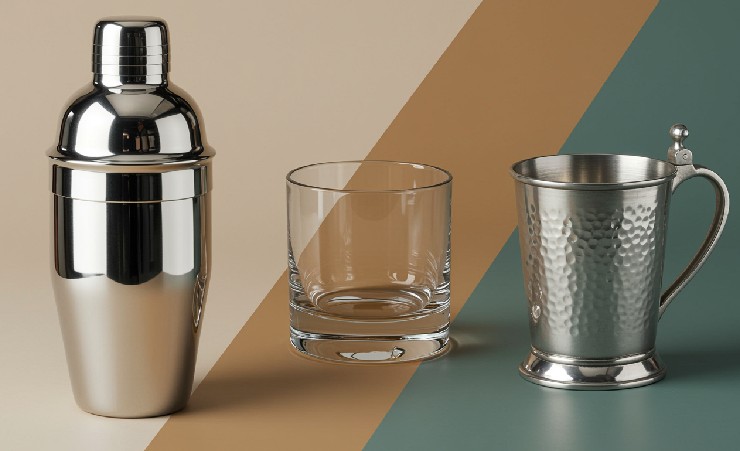
Alright, let’s talk about what your shaker is made of—because yes, it matters. Not just for how it looks, but for how it handles, how long it lasts, and whether it turns into a rusty mess after three mojitos.
Stainless Steel
Stainless steel shakers are the gold standard. Most serious shakers are made of stainless steel for a reason. It’s durable, rust-resistant, and perfectly retains the cold for quick chilling.
- Pros: Strong, hygienic, and holds up to regular use
- Cons: Gets very cold (yes, your hands will notice)
- Top pick: A weighted Boston shaker, the weighted base gives you a nice balance and better control when you’re shaking up a storm
Glass
You’ll usually find glass as one half of a Boston shaker, and while it looks great and lets you see the mixing magic, it’s also a bit of a diva. One wrong knock and you’ve got shards instead of sours.
- Pros: Aesthetic appeal, lets you see your cocktail come together
- Cons: Breakable, and not ideal if you’re the clumsy type
- Best for: Occasional home use, or when you want to impress your mates without juggling three drinks at once
Pewter (and other fancy metals)
If you want your shaker to scream vintage heirloom or found this at a 1920s speakeasy, pewter’s your guy. It’s all about aesthetics, but it’s not the most practical.
- Pros: Gorgeous, unique, and gives off serious Gatsby vibes
- Cons: Expensive, dents easily, and needs more TLC when cleaning
Also worth a nod: Japanese-style shakers. These are a refined version of the Cobbler—sleek, often hand-finished, and designed for precision. They’re not cheap but worth it if you’re into top-tier performance.
Size and Capacity Considerations
Now, before you click “add to cart,” consider how many cocktails you’re making. The capacity of the wrong shaker can really affect your flow.
Small (250–350ml)
Perfect for single servings, especially spirit-forward drinks like martinis or Manhattans, these are great for one-offs. They’re easy to handle and chill quickly, though not the best choice for entertaining more than, say, your cat.
Medium (350–550ml)
Your Goldilocks option—just right for most home bartenders. You can comfortably shake 1–2 drinks without a mess. It’s versatile and still easy to grip, though it might feel a bit small for party-sized batches.
Large (550ml+)
Ideal for mixing cocktails for friends, family, and that one neighbor who always shows up. Great for batching mojitos or margaritas, though heavier and harder to control—especially with a full metal build.
Ease of Use and Cleaning

Let’s be real—if your shaker’s a pain to clean, you’ll stop using it faster than you can say sticky mess. Ease of use and cleaning is massive when it comes to actually enjoying your home bartending hobby.
Assembly and Disassembly
- Cobbler shakers can be fiddly. That little cap tends to vanish (possibly into another dimension), and the top sometimes welds itself on when cold.
- Boston shakers are easier to take apart—just a firm whack on the side and you’re good. But they do need a separate strainer.
- French shakers sit somewhere in the middle—less jamming, but still need practice to separate smoothly.
Dishwasher-Safe Options
Most stainless steel shakers are dishwasher-safe (double-check the label), which makes cleaning much easier. But anything with a painted finish or copper coating should be hand-washed only, or it will turn into an abstract art piece.
Cleaning Tips by Shaker Type
- Cobbler: Rinse immediately after use. If the cap sticks, soak it. Use a small brush to scrub the built-in strainer.
- Boston: Easy. Just rinse both tins and throw them in the dishwasher.
- Glass Boston: Hand wash if it’s not tempered—cracks can happen with sudden heat changes.
- French: Wipe dry after washing to avoid water spots, especially on polished finishes.
If your shaker starts smelling funky, add a few drops of lemon juice or vinegar to a warm water soak. Yes, that happens, especially after a week of espresso martinis.
Deep Cleaning Tips
- Once a week, soak your shaker in warm water with a splash of white vinegar or lemon juice—it removes odours and cocktail residue.
- Use a soft cloth and gentle polish for stubborn stains (especially in copper or gold-finish shakers). Skip anything abrasive
Storage
- Store your shaker dry—moisture leads to rust, even on good-quality steel
- If it’s a multi-piece shaker (like Cobbler or French), leave it disassembled so it can air out completely
- Keep it in a cool, dry spot—away from direct sunlight and sticky fingers
Features and Accessories
Some shakers have handy features that make life easier, while others go full Bond gadget. It depends on how serious (or playful) you want to get.
Built-in Strainers & Jiggers
- Cobbler shakers have built-in strainers, which is great—until they clog with mint or ice.
- Some newer models include integrated jiggers in the cap (usually 15ml or 30ml), which are handy for quick pouring.
Additional Tools
Look for these in shaker sets or as add-ons:
- Citrus reamer: For fresh juice directly into the shaker (because bottled lime juice is a crime)
- Measuring lines: Found inside some tins or glass shakers—great for accuracy without needing a separate jigger
- Weighted bases: Adds balance and improves control while shaking like a maniac
Accessories Worth Having
- Hawthorne and fine mesh strainers (especially if you go for Boston or French shakers)
- A muddler for smashing herbs and fruit
- Bar spoon with a twisted handle (stylish and functional)
- Ice tongs or scoop—because your hands don’t belong in the ice bucket
Performance and Mixing Effectiveness

Believe it or not, different shakers do impact how your drinks taste. It’s not just about showing off.
Aeration
Shaking isn’t just to look cool—it mixes, chills, and aerates. That gives a cocktail like a whiskey sour that lovely frothy top. Boston shakers provide better aeration because you can go hard without worrying about spillage.
Chilling
The more surface area the ice hits, the faster your drink chills. Metal tins are ideal—they pull heat out of the drink fast. A double-tin Boston or French shaker will chill your drink quicker than a Cobbler.
Drink Types
- Spirit-forward drinks (martinis, negronis) don’t need intense shaking. Use a small or medium tin to avoid over-dilution.
- Citrus-heavy cocktails (margaritas, daiquiris) need a good, hard shake for froth and balance. Boston’s perfect here.
- Creamy cocktails (White Russians, Brandy Alexanders) benefit from extra aeration—again, go Boston or French.
Who Should Use Which Cocktail Shaker?
Feeling overwhelmed by all the shaker options? Let’s break it down and match the proper shaker to your vibe:
-
Beginner: Start with a Cobbler shaker. It’s super easy to use and doesn’t require any extra tools—just shake and pour.
-
Intermediate or Home Entertainer: Go for a Boston shaker with a weighted base. It takes a bit of practice, but once you’ve got it, it’s fast, efficient, and ideal for making drinks back-to-back.
-
Style Enthusiast: The French (Parisian) shaker is your go-to. It looks sleek, feels great in the hand, and adds flair to your shaking game.
-
Lazy Cleaner: Stick with an all-metal Boston shaker. It has no strainer or cap—just two parts, and most are dishwasher safe. Less cleaning, more sipping.
-
Party Host: Choose a large Boston shaker or a fun novelty shaker. You can batch your cocktails, keep the drinks flowing, and entertain your guests with something different.

The original DadShop writer, owner, fun loving and tech guy. Great with computers, gadgets, quick on his feet and lover of novelty gifts. Ben writes for our wonderful blog occasionally just to pass time.